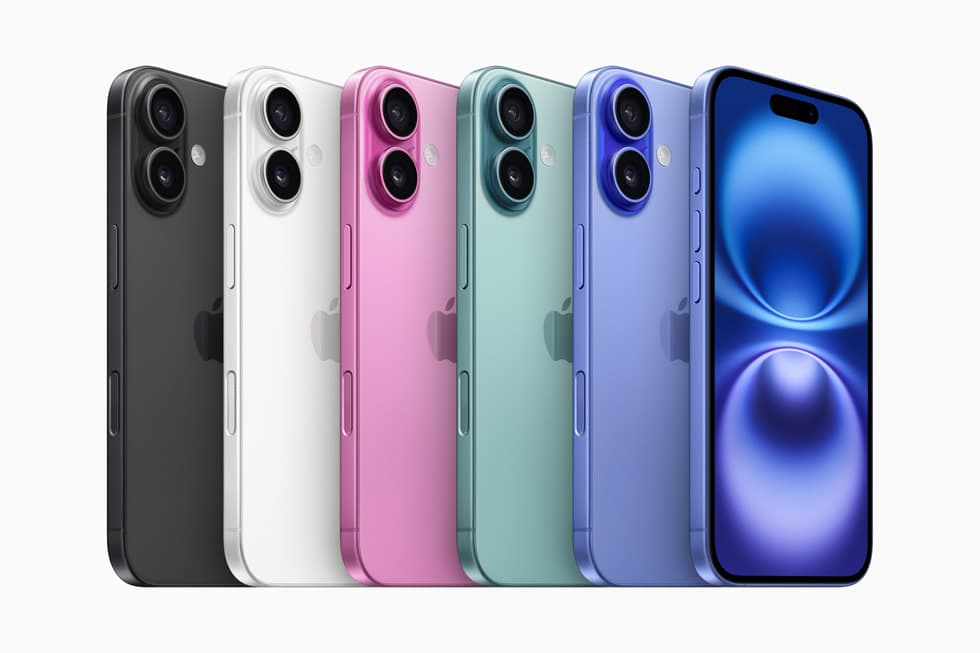
Direct Answer / Executive Summary: The iPhone 16 ($799) and iPhone 16 Plus ($899) represent Apple's most substantial baseline upgrade in half a decade. By leaping directly from the A16 Bionic to the second-generation 3-nanometer A18 processor, pairing it with 8GB of unified memory, adding the physical Action Button, and integrating the brand-new Camera Control sapphire capacitive button, Apple eliminated the architectural compromise historically separating baseline models from their Pro counterparts.
| Feature Parameter | iPhone 16 Baseline | Previous iPhone 15 Baseline |
|---|
| Process Node | TSMC 3nm (N3E) | TSMC 4nm (N4P) |
| CPU Configuration | 6-Core A18 (2P + 4E) | 6-Core A16 Bionic (2P + 4E) |
| CPU Performance vs Predecessor | +30% Faster | Baseline |
| GPU Performance & Capabilities | +40% Faster, Hardware RT | Software Ray Tracing Only |
| Neural Processing Unit (NPU) | 16-Core, 35 TOPS | 16-Core, ~17 TOPS |
| System Memory (RAM) | 8GB LPDDR5X (Unified) | 6GB LPDDR5 |
| Memory Bandwidth | +17% Increase | Baseline |
| Primary Camera Sensor | 48MP Fusion (26mm) | 48MP Main (26mm) |
| Macro Photography Support | Yes (Dedicated AF Lens) | No Macro Support |
| Spatial Video Capture | Yes (Vision Pro Format) | No Spatial Recording |
| Physical User Inputs | Action + Camera Control | Traditional Mute Switch Only |
- End of the Silicon Segregation: Instead of receiving a hand-me-down processor from the prior year's Pro model, the iPhone 16 skips the A17 generation entirely to debut the brand-new A18 processor.
- Hardware-Accelerated Ray Tracing: Mobile gamers now enjoy hardware ray tracing on base iPhones, enabling fluid 60fps console-tier rendering for AAA titles like Resident Evil 7 and Death Stranding.
- Tactile Photography Mastery: The Camera Control module allows fine adjustment of focal lengths, exposure compensation, and photographic styles with single-finger tactile gestures.
- Enhanced Thermal Envelope: A redesigned internal logic board with an aluminum thermal substructure delivers up to 30% higher sustained gaming performance without thermal throttling.
- Battery Endurance Gains: iPhone 16 delivers up to 22 hours of video playback (a 2-hour leap over iPhone 15), while iPhone 16 Plus pushes to 27 hours, setting a benchmark in battery longevity.
The technological centerpiece of the iPhone 16 is the A18 processor, manufactured using TSMC’s cutting-edge second-generation 3-nanometer (N3E) lithography.
| Subsystem Component | Core Layout | Architectural Specifications & Advantages |
|---|
| High-Performance Cores | 2x P-Cores | Class-leading single-thread performance, wider decode engines, 30% faster than A16 |
| High-Efficiency Cores | 4x E-Cores | Minimal energy draw for sustained background tasks, 30% power savings |
| Graphics Accelerator | 5-Core GPU | Hardware-accelerated ray tracing (up to 5x faster than software), dynamic caching |
| Generative AI Engine | 16-Core Neural Engine | 35 TOPS machine learning compute optimized for on-device Apple Intelligence |
| Unified Memory Fabric | 8GB LPDDR5X | High-bandwidth unified memory bus providing a 17% wider data pathway |
The 6-core central processor consists of two high-performance cores paired with four high-efficiency cores. Apple engineered these cores with wider decode blocks, deeper execution caches, and lower switching latencies. In benchmarking trials, the A18 CPU proves 30% faster than the A16 Bionic while consuming 30% less power for identical computational workloads.
Graphics processing sees a massive generational leap. The 5-core GPU incorporates hardware ray tracing, delivering up to 5x higher frame rates in ray-traced lighting models compared to software-emulated shading. Gamers also benefit from native dynamic caching, which allocates onboard system memory dynamically based on shader demand.
To support on-device Apple Intelligence workflows, the A18 incorporates an upgraded 16-core Neural Engine capable of executing 35 trillion operations per second (TOPS). Paired with an expanded 8GB unified memory pool and a 17% higher bus bandwidth, the A18 loads and queries 3-billion-parameter language models in milliseconds directly within system RAM.
The iPhone 16 and 16 Plus feature aerospace-grade aluminum chassis with a 75% recycled internal frame. The rear back glass utilizes an advanced dual-ion exchange formulation, infusing saturated pigment directly into the molecular structure of the glass. The available finishes include Ultramarine, Teal, Pink, White, and Black.
| Hardware Component | Sensor Technology | Physical Gesture & Functional Control |
|---|
| Sapphire Crystal Surface | Smooth Tactile Bevel | Resists scratches and provides low-friction surface for fingertip tracking |
| Capacitive Touch Grid | Multi-Point Touch Sensor | Tracks sliding gestures to adjust Zoom, Exposure, Depth of Field, and Photo Styles |
| Force Sensor Layer | Piezoelectric Force Gauge | Detects two-stage actuation: light press reveals clean UI overlay; double-light press switches tools |
| Haptic Actuator | Taptic Engine Feedback | Delivers crisp mechanical clicks replicating an authentic camera shutter switch |
The legacy ring/silent toggle switch has been replaced by the Action Button. Users can assign custom single-press actions:
- Toggling Focus modes
- Launching the Flashlight
- Capturing instant Voice Memos
- Activating Translate
- Executing multi-step iOS Shortcuts (e.g., smart home automations, launching third-party apps).
Located on the lower right flank of the phone, Camera Control is protected by smooth sapphire crystal edged in color-matched stainless steel. It bridges physical mechanical switching with digital capacitive touch:
- Full Click: Instantly launches the Camera app; a second click captures a photo.
- Click and Hold: Instantly initiates high-resolution video recording.
- Light Press: Reveals a minimalist overlay displaying focal presets, depth-of-field, and tone options.
- Swipe Gesture: Swiping along the capacitive sensor scrolls through zoom factors smoothly, simulating an optical lens ring.
- Visual Intelligence Launcher: Pointing the camera at a storefront or object and clicking Camera Control initiates on-device contextual AI recognition.
| Lens System | Sensor & Aperture | Capabilities & Outputs |
|---|
| 48MP Fusion Camera | 26mm, f/1.6, Sensor-Shift, 100% Focus Pixels | 24MP super-high-res default photos, 48MP full-sensor ProRAW / HEIF |
| 2x Optical-Quality Telephoto | 52mm, f/1.6, Sensor Crop Matrix | 12MP zoom with zero optical loss, 4K video recording with HDR |
| 12MP Ultra Wide Lens | 13mm, f/2.2, 120° FOV, Autofocus | Macro photography down to 2cm, gathers 2.6x more light than 15 |
| Spatial Capture | Dual-Sensor Vertical Alignment | Stereoscopic 3D video & audio for Apple Vision Pro playback |
The vertical camera geometry serves a vital purpose: by aligning the Fusion and Ultra Wide lenses on a single vertical axis, the iPhone 16 can record synchronized stereoscopic video with spatial audio. These recordings transport viewers into immersive three-dimensional spatial environments when viewed on Apple Vision Pro.
| Model | 128GB Storage | 256GB Storage | 512GB Storage |
|---|
| iPhone 16 (6.1") | $799 | $899 | $1,099 |
| iPhone 16 Plus (6.7") | $899 | $999 | $1,199 |
Both models support faster MagSafe charging up to 25W when paired with a 30W power adapter (reaching a 50% charge in approximately 30 minutes) alongside Qi2 wireless charging standards.
Yes. The capacitive sapphire Camera Control button is standard across the entire lineup, including the base iPhone 16 and iPhone 16 Plus.
Yes. Thanks to the new autofocus system integrated into the 12MP Ultra Wide lens, the iPhone 16 and iPhone 16 Plus support close-up macro photography down to 2 centimeters, a feature previously reserved for Pro models.
The A18 CPU is up to 30% faster than the A16 Bionic found in the iPhone 15, while the GPU is up to 40% faster and introduces hardware-accelerated ray tracing for console-grade gaming.
No. The iPhone 16 and iPhone 16 Plus feature 60Hz Super Retina XDR OLED displays. If 120Hz ProMotion adaptive refresh rate and Always-On display are priorities, consider the iPhone 16 Pro and Pro Max.
The iPhone 16 and iPhone 16 Plus represent an extraordinary shift in Apple's product stratification. By delivering uncompromised A18 silicon, 8GB of RAM, spatial video capture, the Action Button, and Camera Control at the entry price of $799, Apple has eliminated the traditional compromises of choosing a non-Pro device. For 90% of global smartphone users, the iPhone 16 is the most balanced smartphone purchase on the market today.
Sources & References:
- Apple Inc. Technical Specifications: iPhone 16 and iPhone 16 Plus (Published September 9).
- Apple Newsroom: Apple introduces iPhone 16 and iPhone 16 Plus.
- TSMC 3nm (N3E) Architecture Briefing.