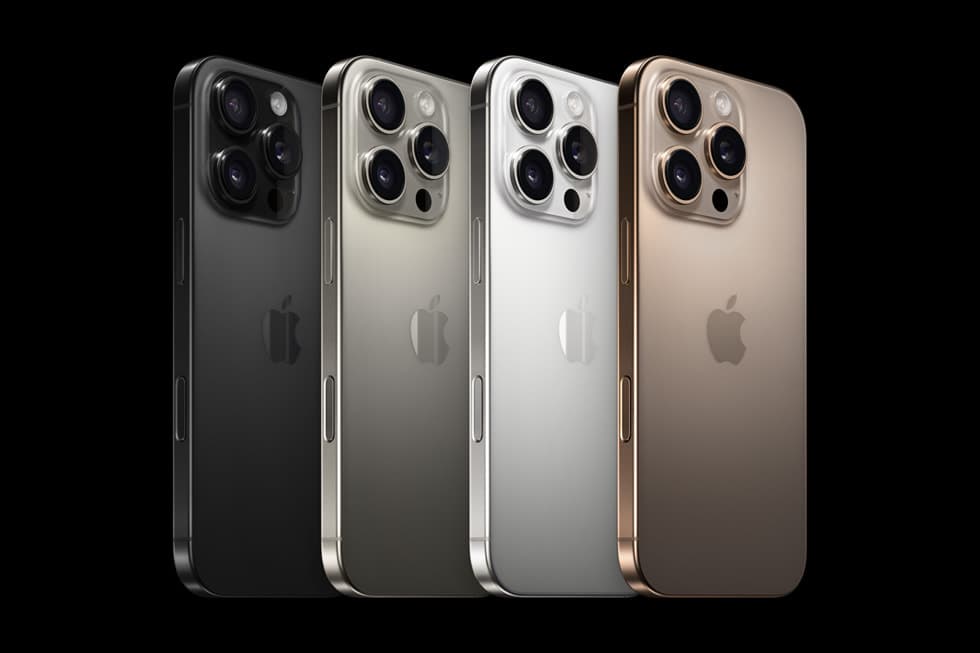
Direct Answer / Executive Summary: The iPhone 16 Pro ($999) and iPhone 16 Pro Max ($1,199) represent Apple’s definitive handheld workstation. Powered by the A18 Pro processor built on TSMC’s second-generation 3nm architecture, these flagships deliver unprecedented computational imaging capabilities: world-first 4K 120 fps Dolby Vision HDR recording, a 48MP Quad-Pixel Ultra Wide sensor, parity 5x Tetraprism telephoto optics across both sizes, expansive 6.3-inch and 6.9-inch borderless displays, and an onboard 4-microphone studio array featuring machine-learning Audio Mix.
| Hardware Specification | iPhone 16 Pro | iPhone 16 Pro Max |
|---|
| Display Size & Type | 6.3-inch Super Retina XDR | 6.9-inch Super Retina XDR |
| Refresh Rate | 1–120Hz ProMotion Adaptive | 1–120Hz ProMotion Adaptive |
| Border Dimensions | Thinnest Borders on Any Apple Device | Thinnest Borders on Any Apple Device |
| Silicon Architecture | A18 Pro (6-Core CPU, 6-Core GPU) | A18 Pro (6-Core CPU, 6-Core GPU) |
| Neural Engine Compute | 16-Core (35 TOPS, Low-Jitter) | 16-Core (35 TOPS, Low-Jitter) |
| Primary Camera | 48MP Fusion (24mm, f/1.78) | 48MP Fusion (24mm, f/1.78) |
| Ultra Wide Optics | 48MP Quad-Pixel (13mm, f/2.2) | 48MP Quad-Pixel (13mm, f/2.2) |
| Telephoto Optics | 12MP 5x Tetraprism (120mm) | 12MP 5x Tetraprism (120mm) |
| Video Capabilities | 4K 120fps Dolby Vision HDR | 4K 120fps Dolby Vision HDR |
| Audio Subsystem | 4-Mic Studio Array, Audio Mix | 4-Mic Studio Array, Audio Mix |
| Battery Life (Video) | Up to 27 Hours | Up to 33 Hours (Record High) |
| Enclosure Material | Grade 5 Titanium + Aluminum | Grade 5 Titanium + Aluminum |
| Weight | 199 grams | 227 grams |
| Starting Price (USD) | $999 (128GB) | $1,199 (256GB) |
- The A18 Pro Computational Engine: The A18 Pro features 15% faster CPU compute, 20% higher GPU performance with 2x hardware ray-tracing throughput, and dedicated display engines supporting ProMotion and USB 3 speeds up to 10Gbps.
- Cinematographic 4K 120fps Capture: Content creators can record pristine 4K 120fps in Dolby Vision or ProRes directly to external SSDs via USB 3, adjusting playback speed to 60fps, 30fps, or 24fps quarter-speed cinematic slow motion post-capture.
- Microphone Array with Audio Mix: Four studio-quality microphones with ultra-low noise floors enable directional beamforming and Spatial Audio capture. Post-production Audio Mix isolates human voices from ambient noise using trained deep neural networks.
- Telephoto Parity: The compact 6.3-inch iPhone 16 Pro receives the identical 5x Tetraprism lens previously exclusive to the 15 Pro Max, providing parity across both screen sizes.
- Substantial Thermal Headroom: A thermal architecture combining a graphite-clad substructure with solid-state diffusion-bonded aluminum delivers up to 20% improvement in sustained workloads.
The A18 Pro is the apex of modern mobile silicon engineering. Engineered on TSMC’s refined 3nm (N3E) lithography, it packs transistors into an optimized power envelope that outclasses contemporary desktop-tier mobile processors.
| Processing Subsystem | Core Configuration | Architecture & Microarchitectural Capabilities |
|---|
| Performance Cores | 2x High-Performance Cores | Largest L1/L2 caches in mobile computing, 15% faster single-thread IPC |
| Efficiency Cores | 4x High-Efficiency Cores | World-leading instructions-per-watt efficiency, 20% lower system power draw |
| Pro GPU Architecture | 6-Core Pro GPU | 2x faster hardware-accelerated ray tracing, dynamic caching, mesh shading |
| Pro Neural Engine | 16-Core Neural Engine | 35 TOPS throughput directly connected to expanded unified memory bus |
| Advanced Media Engine | Dedicated Media Cores | Hardware AV1 decode, ProRes encode/decode accelerators, 10Gb/s USB 3 |
| Display Controller | Dedicated ProMotion Driver | Drives 1Hz to 120Hz adaptive refresh rates and ultra-low-power Always-On display |
The A18 Pro pairs two high-performance execution cores with four efficiency cores. With enhanced branch prediction units, larger L1/L2 caches, and expanded memory interfaces, the A18 Pro is 15% faster than the A17 Pro while drawing 20% less energy.
The 6-core GPU architecture delivers a 20% performance uplift over A17 Pro. Hardware-accelerated ray tracing runs twice as fast, enabling lifelike indirect lighting, realistic reflections, and physically based rendering in mobile game engines like Unreal Engine 5 and Metal 3.
Unlike the baseline A18, the A18 Pro integrates Apple's dedicated Advanced Media Engine. This hardware unit features dedicated encoders for ProRes video, an AV1 hardware decoder, a high-throughput display engine driving the 120Hz ProMotion display, and a dedicated USB 3 controller delivering 10Gb/s transfer speeds.
To expand display sizes without expanding device dimensions, Apple utilized Border-Reduction Structure (BRS) technology. BRS routes pixel wiring circuitry under the display active area rather than along the outer edges, resulting in the thinnest bezels ever fitted to an Apple device.
| Device Model | Previous Generation | iPhone 16 Pro Series | Screen Expansion | Bezel Technology |
|---|
| Pro Standard | 6.1-inch (iPhone 15 Pro) | 6.3-inch Super Retina XDR | +0.2-inch active display | Sub-pixel Border-Reduction Structure |
| Pro Max Flagship | 6.7-inch (iPhone 15 Pro Max) | 6.9-inch Super Retina XDR | +0.2-inch largest iPhone screen | Sub-pixel Border-Reduction Structure |
Both Super Retina XDR panels feature:
- 1Hz to 120Hz ProMotion adaptive refresh rates
- Always-On display capability
- 2,000 nits peak outdoor brightness
- 1 nit minimum brightness for low-light comfort
- 2nd-generation Ceramic Shield front glass (50% tougher than first-gen formulations).
| Pipeline Stage | Hardware Subsystem | Processing Function & Output Fidelity |
|---|
| 1. Sensor Capture | 48MP Second-Gen Fusion Sensor | 2x faster sensor readout with zero rolling-shutter distortion |
| 2. Hardware Encoding | A18 Pro Image Signal Processor | Real-time frame-by-frame 4K 120 fps Dolby Vision HDR grading |
| 3. High-Speed Export | USB 3 Controller (10Gbps) | Direct write-through capture to external SSDs in ProRes 422 HQ / Log |
| 4. Acoustic Spatialization | 4-Mic Studio Beamforming Array | Studio-grade noise floor reduction with In-Frame, Studio, and Cinematic Audio Mix |
The flagship video feature is 4K 120 fps recording in Dolby Vision HDR. Enabled by the faster sensor readout of the second-generation 48MP Fusion sensor and the processing throughput of A18 Pro, filmmakers can shoot high-frame-rate footage without dropping frames or compressing color depth.
In post-capture, users can alter video playback speed directly within the Photos app:
- 120 fps: Fluid real-time action sports playback.
- 60 fps: Crisp high-framerate broadcast quality.
- 30 fps: Natural cinematic motion.
- 24 fps: Quarter-speed slow-motion film aesthetic.
The iPhone 16 Pro integrates four studio-quality microphones with ultra-low noise floors, enabling three distinct algorithmic audio mastering profiles:
- In-Frame: Analyzes camera field of view and strictly isolates the voices of people visible on screen, muting off-camera background conversation.
- Studio: Replicates the acoustic characteristics of an acoustically treated recording studio, removing room reverberation and wall reflections.
- Cinematic: Formats vocal tracks to the center channel while panning environmental sounds across surround channels, mimicking professional movie sound design.
In the iPhone 15 generation, only the Pro Max featured the 5x optical telephoto lens. With the iPhone 16 Pro, Apple redesigned the internal battery and logic board layout, enabling the tetraprism glass structure to fit into the compact 6.3-inch chassis.
| Lens Module | Sensor & Aperture | Technical Specifications |
|---|
| 48MP Fusion Camera | 24mm, f/1.78, 2nd-gen OIS, 100% Focus Pixels | 1/1.28" sensor, 2x faster readout, zero shutter lag in 48MP ProRAW |
| 48MP Ultra Wide Lens | 13mm, f/2.2, 120° FOV, Hybrid AF | Quad-pixel sensor, macro autofocus, 48MP ProRAW ultra-wide captures |
| 12MP Telephoto Lens | 120mm, f/2.8, Tetraprism Light-Folding | 5x optical zoom, 3D sensor-shift OIS, 25x digital zoom capability |
To resolve thermal complaints seen during demanding workloads on previous titanium designs, the iPhone 16 Pro features a completely re-engineered internal structure:
- Aluminum Substructure: 100% recycled aluminum substructure bonded to the Grade 5 titanium exterior using solid-state diffusion.
- Graphite Cladding: Logic boards are flanked by graphite thermal plates that channel heat away from the A18 Pro silicon to the chassis perimeter.
- Sustained Performance: Delivers up to 20% higher sustained compute throughput during extended gaming and ProRes video capture.
Battery endurance reaches historic highs:
- iPhone 16 Pro: Up to 27 hours of continuous video playback.
- iPhone 16 Pro Max: Up to 33 hours of video playback—the longest battery life ever recorded on an iPhone.
Yes. Apple has achieved optical parity: both the 6.3-inch iPhone 16 Pro and the 6.9-inch iPhone 16 Pro Max include the identical 5x Tetraprism (120mm equivalent) telephoto lens.
Yes. 4K 120fps video in HEVC and Dolby Vision formats can be recorded directly to internal flash storage. For uncompressed 4K 120fps ProRes recording, an external SSD connected via the 10Gbps USB 3 Type-C port is required.
The iPhone 16 Pro and Pro Max are available in four Grade 5 titanium finishes: Desert Titanium (a subtle gold-bronze tone), Natural Titanium, White Titanium, and Black Titanium.
The iPhone 16 Pro and iPhone 16 Pro Max represent the pinnacle of mobile hardware integration. With the A18 Pro silicon, 4K 120fps Dolby Vision mastering, 5x telephoto optical parity, and studio-grade audio capture, Apple has turned the smartphone into a self-contained Hollywood-grade production studio. For creative professionals, technologists, and power users, it is the most capable mobile computing tool on Earth.
Sources & References:
- Apple Inc. Technical Specifications: iPhone 16 Pro and iPhone 16 Pro Max (September 9).
- Apple Newsroom: Apple debuts iPhone 16 Pro and iPhone 16 Pro Max.
- ProRes and Dolby Vision Technical Standards Documentation, Society of Motion Picture and Television Engineers (SMPTE).