Four months. That's exactly how long it took Uber’s engineering teams to completely incinerate their entire annual generative AI budget, forcing leadership to abruptly slap spending caps on employee API usage. The company that built its empire on algorithmic optimization forgot a fundamental law of systems architecture: when you transition from human-driven queries to autonomous agentic loops, your compute costs don't scale linearly—they explode.
The Cloud AI Bill Comes Due: Why Uber Blew Its Budget in Four Months....
According to reports from TechCrunch, Uber had spent the early months of 2026 encouraging its staff to integrate AI into every possible workflow, only to watch in horror as token consumption ran rampant.
This isn't just an administrative oversight; it's an early-warning signal for the entire enterprise tech sector. The spec sheet is telling you one story of cheap, abundant intelligence; the cloud bills tell another. As enterprises rush to replace human workers with autonomous systems—a trend we analyzed in depth regarding ClickUp's shift to AI agents—they're hitting a hard wall of physical and economic infrastructure limits.
The industry is currently attempting a massive architectural migration. We're moving from static "copilots" that wait for human input to autonomous agents that run continuously in background loops.
 But if you've ever actually deployed this at scale, you know that an autonomous agent is a compute monster. A human engineer might query an LLM ten times an hour; an agent tasked with resolving a software bug or optimizing a database schema can easily execute thousands of queries per minute as it parses code, reads logs, and self-corrects.
When these agentic loops are deployed inside an enterprise VPC (Virtual Private Cloud), traversing a load balancer, and hitting external APIs, the costs compound exponentially. The issue isn't just the sticker price of the tokens; it's the network overhead, the storage IOPS required to maintain state, and the sheer inefficiency of sending massive prompt contexts back and forth across the public internet. Uber’s budget blowout is proof that the current cloud-hosted API model is financially unsustainable for true agentic workloads.
To understand why Uber blew through its budget, we have to look at the math of the ReAct (Reasoning and Action) framework that powers modern AI agents.
When a human interacts with an LLM, the transaction is simple: one prompt in, one response out. The context window is clean, and the cost per query is predictable.
With autonomous agents, the model must maintain a stateful history of its actions, observations, and thoughts. This means that with every single step the agent takes, its context window grows. A five-step loop doesn't cost five times as much as a single query; because of the quadratic scaling of attention mechanisms in Transformer architectures, the token volume—and thus the cost—grows exponentially.
[Step 1: Prompt + System Instructions] -> 2,000 tokens
[Step 2: Step 1 History + Tool Output 1] -> 4,500 tokens
[Step 3: Steps 1-2 History + Tool Output 2] -> 8,000 tokens
[Step 4: Steps 1-3 History + Tool Output 3] -> 13,500 tokens
By the time the agent completes a relatively simple task, it has consumed tens of thousands of tokens. Multiply this by thousands of employees running agents across various development, marketing, and operations subnets, and you have a recipe for financial disaster.
According to data compiled on Epoch AI compute trends, the raw compute power dedicated to running these models is expanding at a breakneck pace, but the efficiency of the software running on top of them is not keeping up. When you are paying a cloud provider for every single token processed, letting agents loose in your environment is equivalent to leaving a high-pressure hose running in a server room.
How did we get to a point where a tech giant has to ration its developers' access to the very technology it claims is the future of its business?
The answer is that we have over-centralized our AI infrastructure in massive, multi-tenant cloud datacenters. Microsoft and NVIDIA are well aware of this bottleneck, which is why their announcements at Build 2026 focused heavily on shifting the compute burden back to the local client.
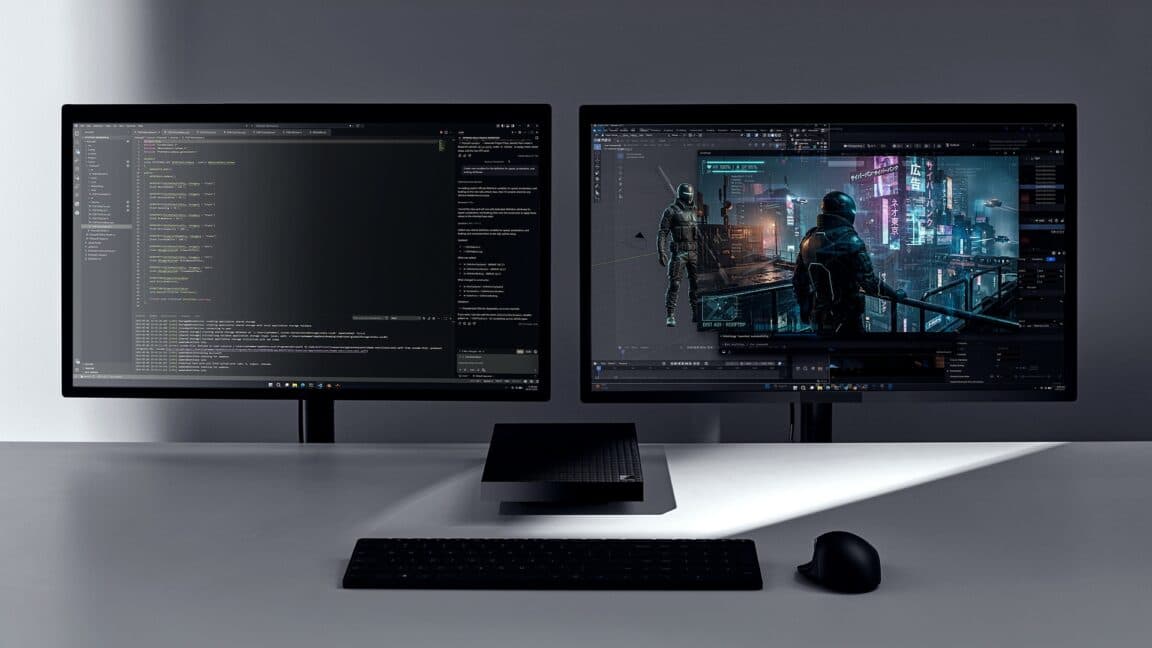
As first spotted in Microsoft's hardware showcase, the tech giant is planning a major push for local developer hardware, specifically highlighted by the new RTX Spark desktop. We dissected the silicon strategy behind this move in our analysis of Nvidia’s $200B CPU Gamble: Inside the Silicon of the RTX Spark.
By putting massive local GPU compute and high-bandwidth memory directly under the developer's desk, Microsoft hopes to offload the massive token-evaluation phase of agent development from their over-burdened Azure datacenters.
+-----------------------------------------------------------------------+
|                       THE AGENTIC COMPUTE SPLIT                       |
+-----------------------------------------------------------------------+
|  CLOUD (Azure/AWS VPC)             |  LOCAL WORKSTATION (RTX Spark)   |
|  - Production Deployment           |  - Developer Testing & Loops     |
|  - High-Value, Secure Queries      |  - Infinite ReAct Iterations     |
|  - Managed IAM & Load Balancers    |  - Zero Token Cost / Low Latency |
|  - High Cost Per Query             |  - Constrained by Local VRAM     |
+-----------------------------------------------------------------------+
Alongside this hardware pivot is Microsoft's Project Solara, an Android-based operating system designed specifically for agents rather than apps. The architectural change nobody's talking about is that Project Solara and local developer tools are designed to run lightweight, highly quantized local models.
If a developer can run a 7-billion parameter model locally on an RTX Spark workstation to test their agentic loops, they bypass the external API entirely. There are no egress fees, no load balancer bottlenecks, and the cost per query drops to the price of the electricity powering the local workstation.
The transition to local AI processing is not without its own severe technical hurdles. The primary bottleneck for local execution is not raw compute horsepower; it's memory bandwidth and capacity.
To run a modern frontier model locally, you need massive amounts of Video RAM (VRAM) to hold the model weights. When you run out of VRAM, the system is forced to offload weights to system RAM (DDR5) or, worse, local SSD storage, causing performance to crater.
This memory starvation has led to some fascinatingly desperate engineering workarounds. Just this week, a new project called nbd-vram went viral on GitHub, allowing Linux developers to use their NVIDIA GPU's VRAM as system swap space.
While this sounds counterintuitive—usually, we want to free up VRAM for GPU tasks—it highlights the extreme, non-linear memory demands of modern developer environments. Developers running complex local compilations, containerized microservices, and local AI models simultaneously are running out of physical system memory.
Using high-bandwidth GPU memory as a ultra-fast swap space over a Network Block Device (NBD) loopback is an architectural hack born of pure desperation. It proves that the standard memory hierarchies of modern x86 and ARM PCs are utterly unsuited for the dual demands of traditional software development and local AI execution.
Adding fuel to this infrastructure fire is the changing regulatory landscape. President Donald Trump signed an executive order establishing a "voluntary framework" for AI companies to share their frontier models with the federal government before public release.
While framed as a measure to protect critical infrastructure and promote "secure innovation," this framework introduces a massive variable into the release pipelines of major AI labs. Any pre-release review period, even a voluntary one, introduces bureaucratic latency.
For enterprise customers, this regulatory friction makes relying solely on advanced cloud APIs a risky bet. If a model update is delayed or altered due to federal review, production systems running in the cloud could face unexpected downtime or behavioral drift.
This regulatory uncertainty is driving enterprise architects to look toward hybrid cloud and bare metal colocation strategies, where they can deploy open-source models (like LLaMA or DeepSeek) within their own physical control. By running open-source models on dedicated hardware, companies can guarantee uptime, lock in their latency profiles, and completely bypass the unpredictable regulatory and financial swings of the public API ecosystem.
Uber’s four-month budget blowout is the first of many cold showers that enterprise IT departments will face this year. The era of treating cloud-hosted frontier LLMs as an infinite, cheap utility is officially over.
The future of enterprise AI is not a single, monolithic model hosted in a distant cloud. It's a highly distributed, hybrid architecture. High-value, low-frequency reasoning tasks will still go to the cloud, routed through secure IAM roles and optimized load balancers.
But the day-to-day, high-frequency agentic loops—the code debuggers, the log parsers, the customer service agents—will be forced down to the edge. They will run on local developer workstations like the RTX Spark, on local bare metal servers in corporate colocation facilities, or on lightweight edge devices.
The organizations that survive this transition without bankrupting themselves will be the ones that treat compute as a finite, precious resource. The spec sheet promised us magic; the reality of systems engineering demands that we build a bigger, local shovel.
- The Token Multiplyer: Autonomous agentic loops (ReAct framework) scale token consumption quadratically due to growing context history, making public cloud APIs financially non-viable at enterprise scale.
- The p99 Latency Wall: Relying on external APIs for multi-step agent actions introduces massive network latency, hitting the throughput ceiling of traditional web architectures.
- The Local Pivot: Hardware like Microsoft's RTX Spark and software like Project Solara represent an industry-wide push to offload developer testing from expensive cloud VPCs to local high-bandwidth silicon.
- Memory Starvation: Desperate workarounds like the
nbd-vram swap hack highlight that memory bandwidth and capacity remain the primary bottlenecks for local AI development.